About · SteelWheels.Photography
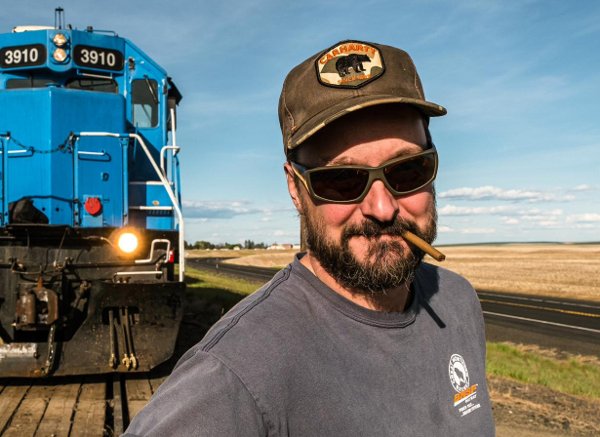
Frédérick M. St. Simon · Railroader · Photographer · Writer · Witness
It began before language. Before the words for it existed in a child’s vocabulary, before there was any frame of reference other than the body’s own recognition of something elemental and true. Osceola, Wisconsin. My father stationed there with the Air Force, a man who loved trains the way some men love mountains — not for what they do but for what they are. And through the thin walls of a Wisconsin winter, through the river-cold air that came off the St. Croix in the dark, the Soo Line would announce itself — that long, mournful declaration that shook something loose in me at an age before memory properly forms. I didn’t know what a locomotive was. I only knew that sound meant something was coming. Something large, something unstoppable, something that belonged to a world more consequential than the one I was standing in.
My father knew. He always knew.
He took me to the Great Northern rail yards in Great Falls, Montana — where the family landed next, where the Rockies begin to assert themselves against the plains — and placed me in the cab of a yard goat. A switch engine. Nothing glamorous. Just an old GN locomotive doing the unglamorous work that all great systems require: the patient, relentless spotting and pulling of cars in the cold Montana morning. But to a boy of five or six, that cab was a cathedral. The smell of diesel and hot metal and burnt oil and the particular kind of grime that only accumulates on something that has worked very hard for a very long time. The gauges. The controls. The throttle. I didn’t touch anything. I didn’t need to. I had already decided, in whatever way children decide things that last a lifetime, that this was the world I belonged to.
At home, in the basement of that same Great Falls house, my father had built a model railroad layout of breathtaking ambition — mountains and depots and yards and trestles, the whole grammar of railroading rendered in miniature with the devotion of a man who understood that some things are worth building just to build them. I spent hours down there. Learning the language. Internalizing the logic of grade and curve, of tonnage and traction, of why a train behaves the way it does, even if it was just a model train. The principles are the same. It was, in retrospect, the first classroom I ever trusted.
Spokane came next, and Spokane — a Mecca for those who understand — is where the railroad ceased to be a love and became a vocation. I skipped school to be at the yards. Not truancy in any nefarious sense; more a redirection of formal education toward an informal one that was considerably more rigorous. I apprenticed myself, uninvited, to the diesel shop culture — learning locomotive mechanics the way you can only learn them by being present, by watching, by asking the men who knew, and keenly listening when they answered. I was not interested in the romance of trains. I was interested in how they worked. The distinction matters. It still does.
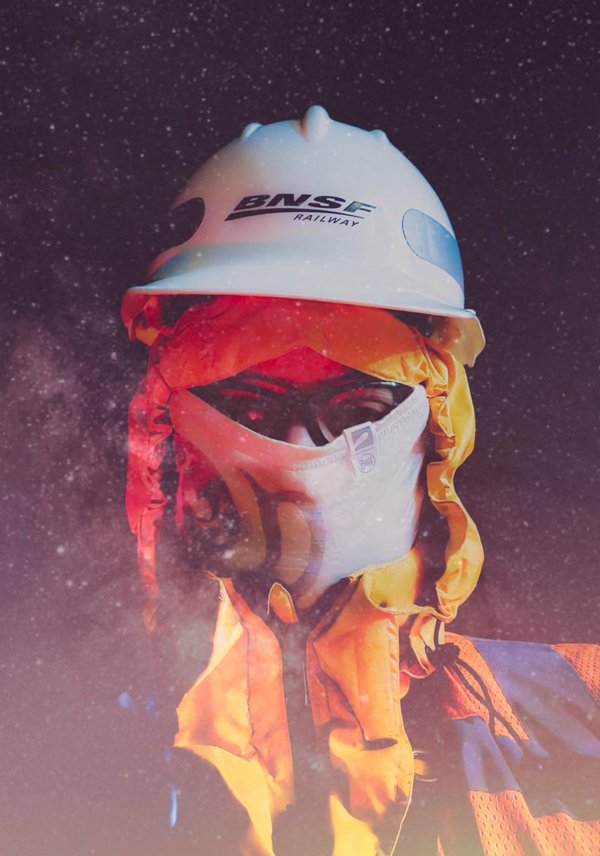
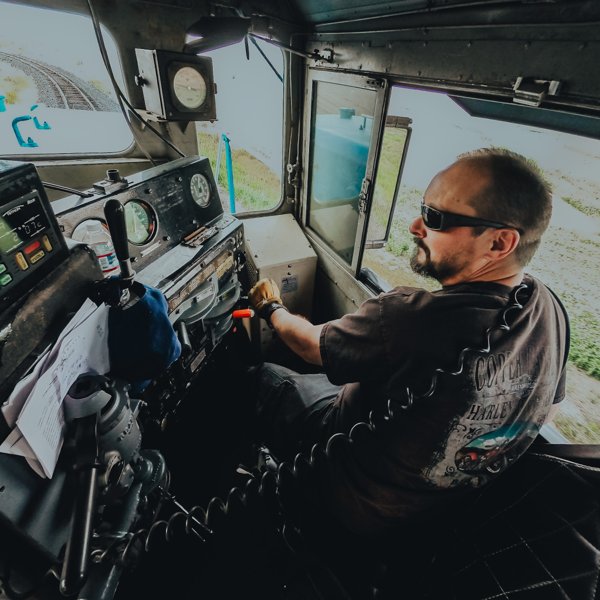
What followed has been four decades of railroading in one way or another — not as an observer, not as a hobbyist with a press pass, but as a working railroader. Transportation. Engineering. Mechanical. Even marketing. All four departments, across Class I carriers and shortlines both, across four decades and four continents. Trainmaster. Locomotive Engineer. Train Conductor. Designated Supervisor of Locomotive Engineers. Production Roadmaster leading sixty-person mechanized gangs across BNSF’s desert subdivisions. Lead Project Manager on track renewal inside a hundred-year-old active passenger tunnel under the Hudson River — a project so operationally complex it required minute-by-minute coordination across disciplines, regulatory bodies, labor contracts, and the unforgiving schedule of a passenger railroad that never stops running. I have had my hand on many a throttle and many a mile with ballast underfoot. I have managed the Decatur Terminal — the largest flat switching yard in America by car volume — and I have walked the Peavine at midnight with a gauge and a flashlight making sure the work was right. I have partnered with the U.S. State Department and the U.S. Coast Guard and post-conflict railroad infrastructure rebuilding projects and the Port Authority of New York and New Jersey.
Slow is smooth. Smooth is fast. That is the operating principle. That is the philosophy. It applies to everything.
The camera arrived the same way the railroad did — not as a decision but as an inevitability. Put into my hands, too, by my father. And when you have spent a lifetime learning to see railroading from the inside, you quickly develop an obligation to document what you see. Not what the tourist sees from the grade crossing. Not what the railfan sees from the fence line. What the man in the cab sees. What the Roadmaster sees at 0300 when the gang is pulling panel and the stars are out and the rail is singing. That interior vision — earned through presence, through competence, through the accumulated weight of years of field-level encounter — is what SteelWheels Photography exists to render visible.
I am not a photographer who also knows about trains. I am a railroader who also makes images of his intimate professional environment. The distinction is not semantic. It shapes every frame. When I compose an image, I am composing from the inside of the subject, not the outside. I know what the engineer is thinking. I know what the roadmaster is calculating. I know what the ballast sounds like under the teeth of a tamper and what the track alignment looks like after a production gang has been through and what the light on a BNSF stack train looks like at last light on the Seligman Sub when the desert cools and the sky goes the color of blued steel and old brass. I shoot from that knowledge. The camera is the instrument. The instrument makes no sound without the player who understands what the music is.
My work has appeared in Trains Magazine, Locomotive, Railroad Heritage, and CTC Board Magazine, and books. I have produced and presented immersive multimedia productions at Winterail and Autumn Leaf — the most discerning audiences in the genre — and produced the critically praised presentation for the Eastern Washington Gateway Railroad in support of their bid to retain operations of the Washington State DOT’s Central Washington Subdivision. The WSDOT called it, without qualification, “hands down the best.”
SteelWheels Photography is not a portfolio. It is not a brand. It is a long-haul journey through the Art – and Craft – of Railroading. Where industry becomes iconography, where the crepuscular peace of a Central Washington evening is obliterated by the aching roar of a trio of SD40-2s working upgrade, and where every shutter click is a spike driven into the American story. I am not here to make the railroad look pretty. I am here to make it look true.
Railroader. Photographer. Writer. Witness.